
CASE STUDY
Bayer FieldView Scouting Notes & Reports
Overview
FieldView is a digital farming platform used by growers and agronomists to monitor field conditions, document observations, and make data-informed decisions throughout the growing season. The scouting experience is a critical part of this workflow, enabling users to capture and review field notes tied to map locations while working in dynamic outdoor environments.
Solution
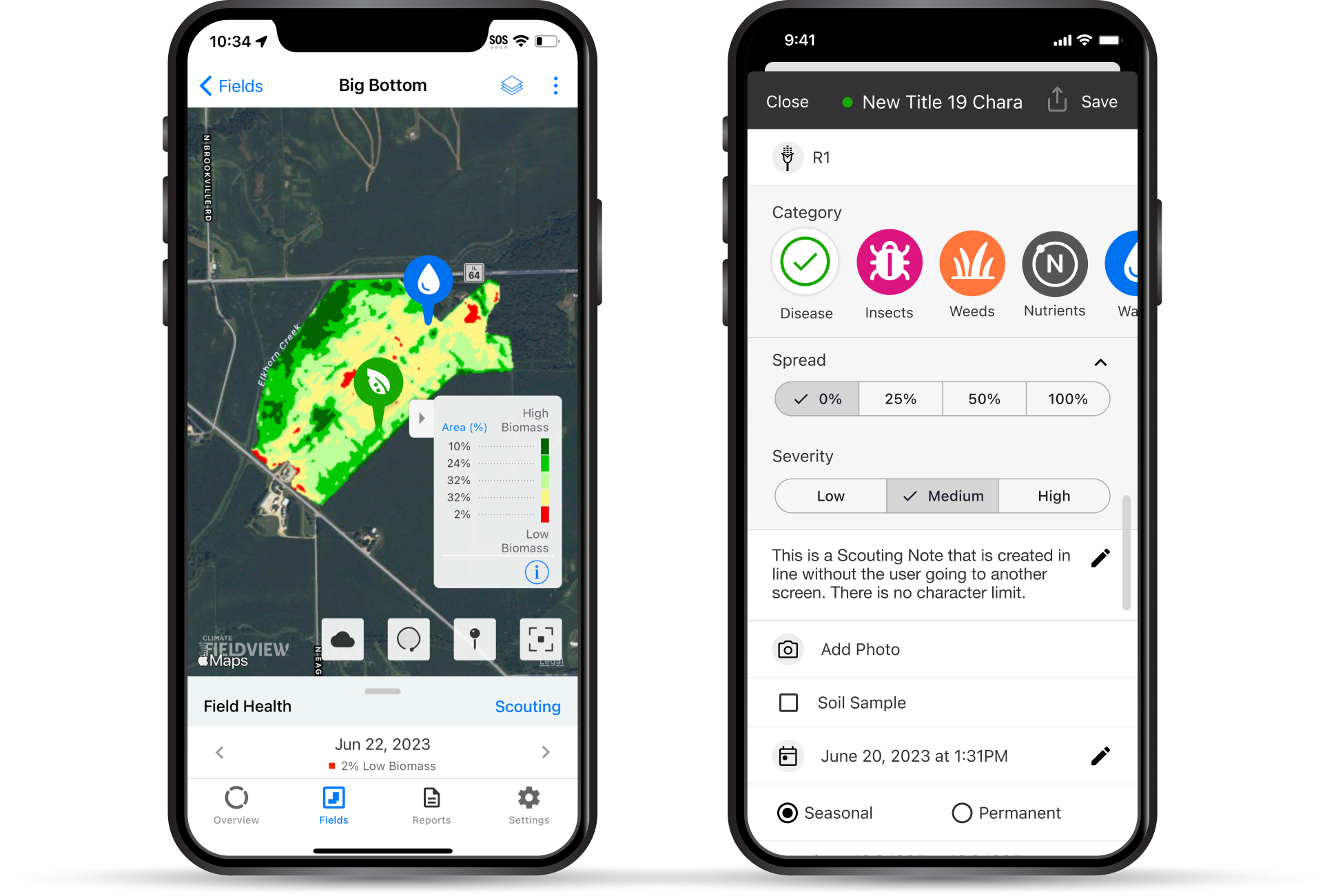
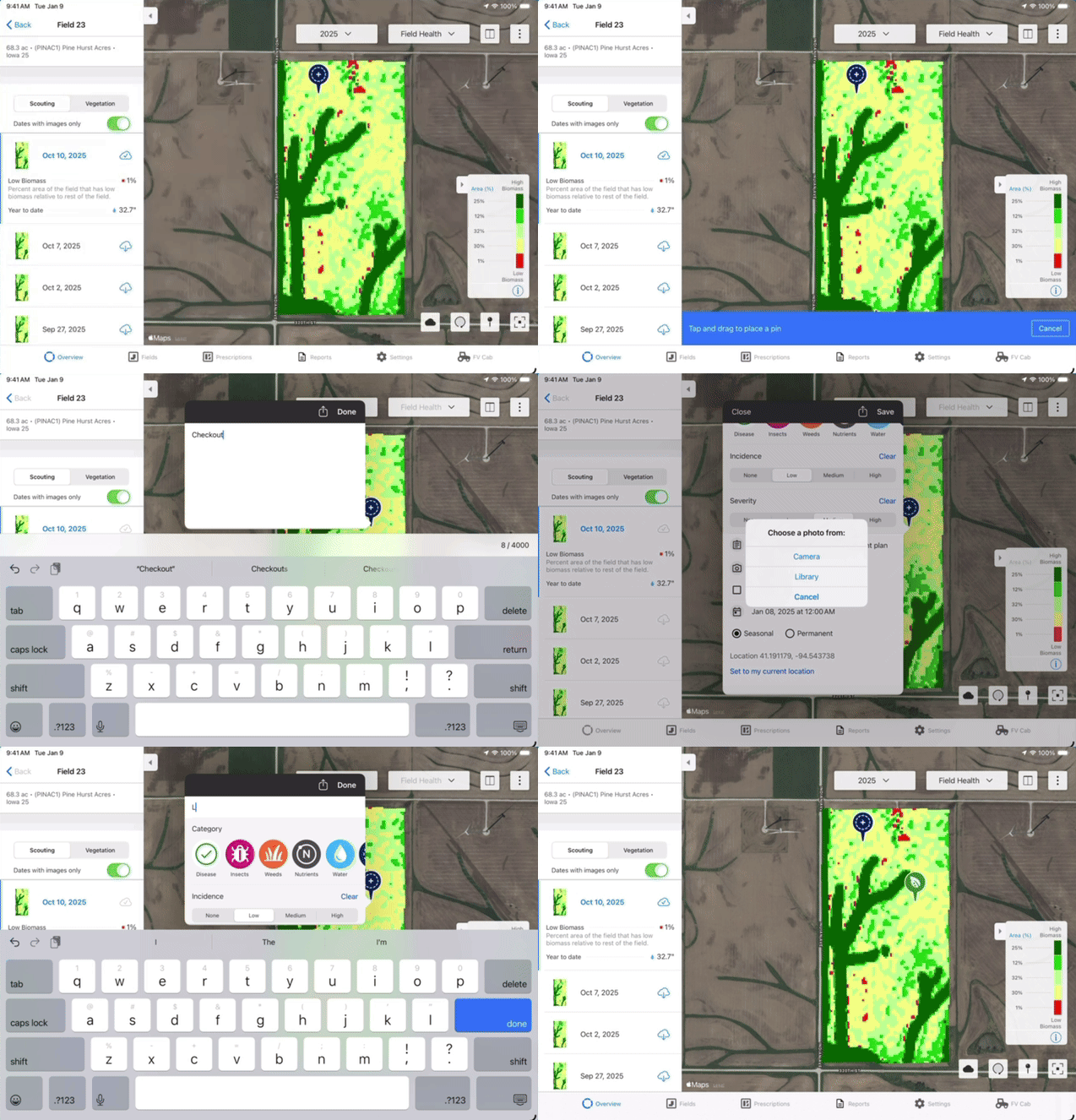
The redesigned scouting map pin interaction prioritized speed, clarity, and contextual awareness, making location-based notes easy to review in context without disrupting the scouting flow. The updated UI reduced cognitive load, improved tap confidence and legibility, and allowed scouts to quickly assess notes while remaining oriented on the map.
To further reduce friction in the field, a category toggle was introduced, enabling scouts to quickly log common issues — such as disease, insects, weeds, nutrients, water, or other — and indicate severity without needing to write a full note. This supported rapid documentation during live scouting while preserving the option to add detail later.
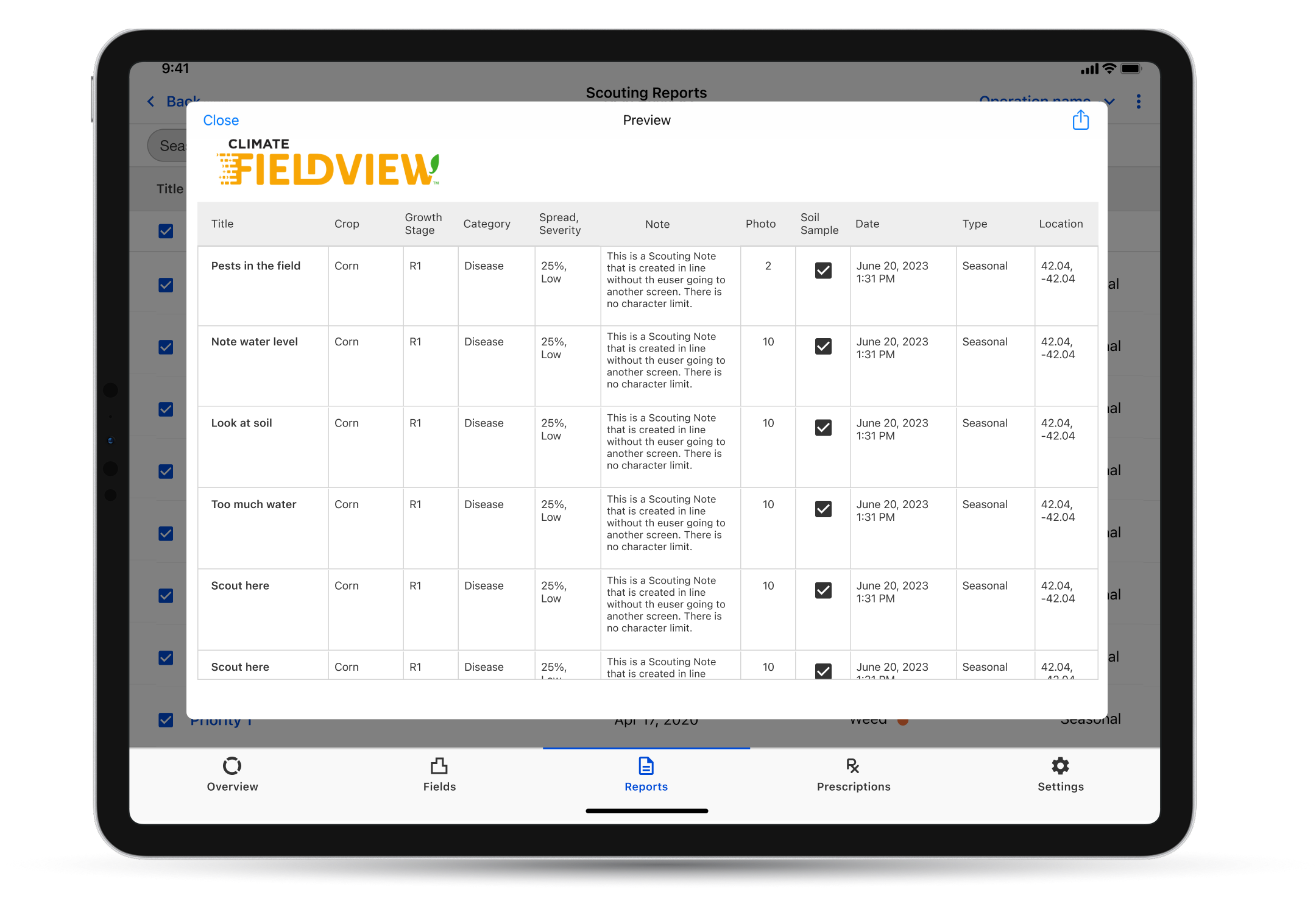
The gap in the desktop experience was addressed by designing a way to compile scouting notes into an action-oriented report, allowing observations captured in the field to translate directly into in-office task logging and follow-up.
Together, these changes created a cohesive workflow from quick field capture to in-context review to actionable reporting.
Impact (Measured Outcomes)
90%+ of View Pin interactions shifted to the redesigned v2 UI within one release cycle, validating the decision to focus on a single, reliable interaction that supported in-context review.
Monthly usage increased 10×–20× post-launch, demonstrating that reducing friction for both quick capture and map-based assessment aligned with real scouting behavior.
Sustained engagement across multiple scouting cycles indicated the interaction became part of regular field workflows rather than a one-time feature use.
Scouting notes could now be compiled into action-oriented desktop reports, closing a critical gap between field observations and in-office task logging.
Legacy interaction patterns declined to near-zero usage as the new workflow replaced the previous fragmented experience.
Metrics derived from anonymized event-level analytics (Heap), measuring repeated interaction with map-based scouting notes over time.
The Process
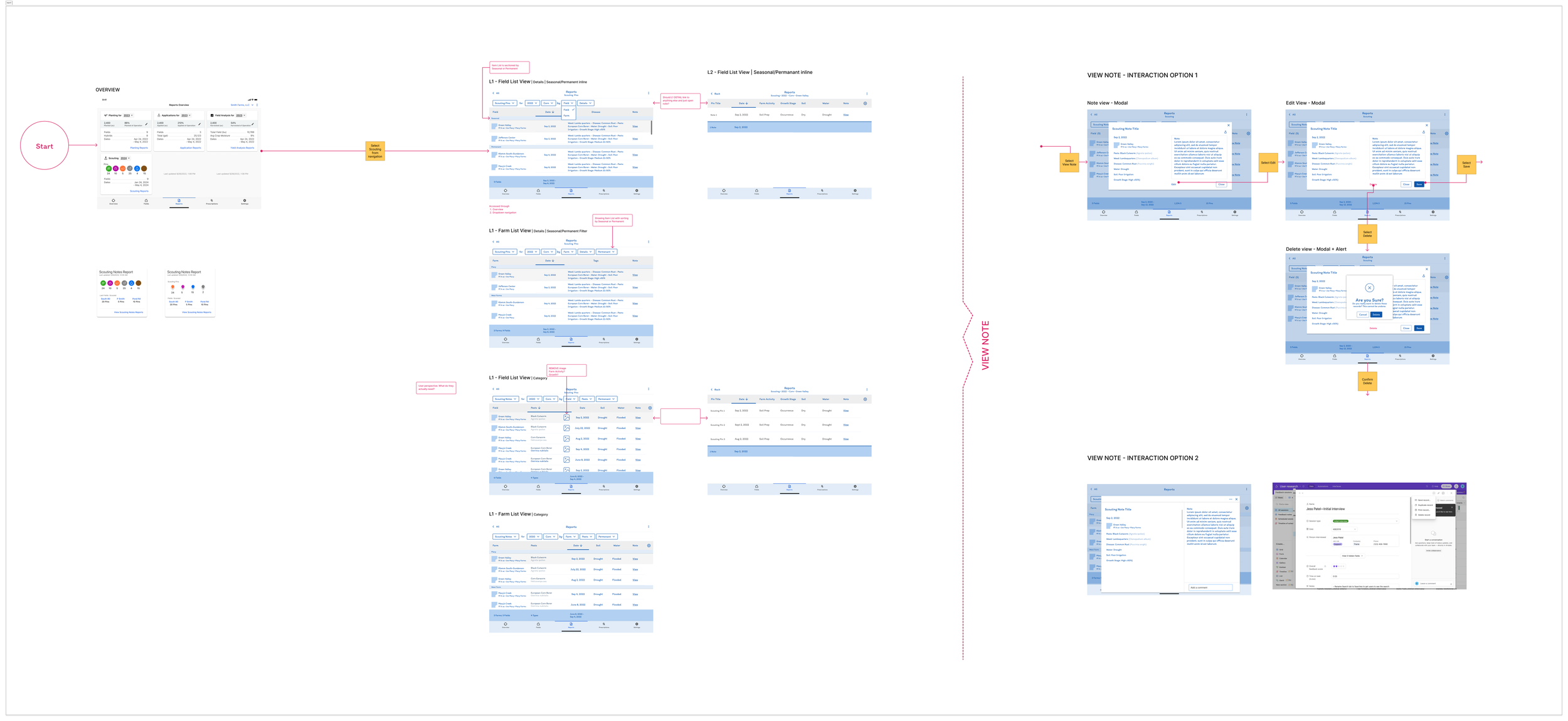
Through field research, journey mapping, prototyping, and iterative testing, our team worked to understand how users scouted and captured information under real conditions and where the workflow broke down between the field and the office. Exploration focused on reducing friction in high-attention environments while preserving the richness of scouting data for later reporting and analysis.
The Problem
While scouting in the field or from their cab, users needed a fast way to review location-based notes while in the field. The existing pin interaction did not support clear, quick, in-context review, leading to low usage, fragmented workflows, and difficulty compiling scouting notes into actionable reports on desktop.
Design Goal
Support fast, in-context review of location-based notes in the field while enabling a seamless transition from scouting observations to desktop reporting. Enable users to scout, view, and evaluate location-based notes directly from the map with minimal friction, making the interaction reliable and repeatable during live scouting sessions.
My Role
I led the UX design efforts for the scouting note experience across mobile and desktop, partnering closely with Product and Engineering from discovery through delivery. My focus was on improving how field observations were captured, reviewed in context, and translated into actionable reporting.